
Overseas Chinese in the Philippines without legal status | Complete removal from BLO blacklist and record cleansing channel
Chinese friends building businesses and spending time with family in the Philippines, if you're currentlyVisa overstayDetained, penalized for unauthorized work while holding a visa, reported due to labor disputes, or even wrongly flagged due to matching name spellings—landing on the Philippine Bureau of Immigration's BLO blacklist. Consequences include visa renewal denials, immediate deportation upon entry, living in fear as an undocumented individual, restricted business dealings, and the looming threat of never being able to re-enter the Philippines again. We've seen too many people trapped in this helpless anxiety.
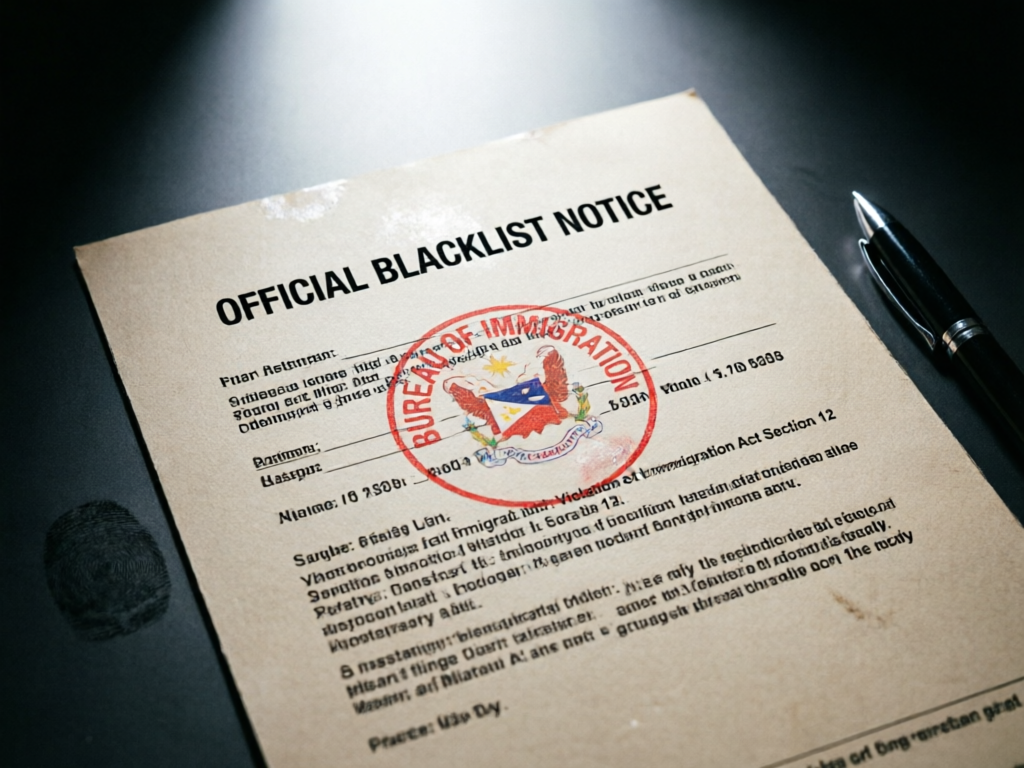
But remember: Philippines BLOBlacklistIt is not a lifetime ban. If you meet the statutory requirements, you can fully lift it by following the official administrative appeal process with USCIS.BlacklistClear immigration records to regain full legal rights for entry and residence.
1. Are you frequently caught up in the high-risk scenarios of Filipino BLOs going underground?
The BLO (Blacklist Order) is an entry ban issued by the Philippine Bureau of Immigration against foreign citizens. Once listed, all ports and immigration systems in the Philippines will flag and intercept them. For Chinese nationals in the Philippines, the most common scenarios triggering a blacklist fall into 5 categories:
Visa Overstay: Blacklist triggered due to prolonged overstay caused by forgetting to renew visa amid busy business, or travel delays from the pandemic or special circumstances.
Invalid visa type: HoldTourist VisaHolding a business visa to work illegally may result in an immigration raid, employer reporting, and being placed on a blacklist.
Labor/Economic Disputes: Conflicts with Philippine employers or local partners led to direct reports by the other party to the Immigration Bureau, triggering restrictions.
False positive due to name collision: High similarity in Chinese Pinyin names caused the system to incorrectly auto-match and blacklist an innocent individual.
Deportation Record Legacy: Previous departure included a deportation record without undergoing formal expungement; re-entry or visa renewal results in immediate detention.
Once listed on the BLO blacklist, all Philippine visa applications will be automatically rejected. Individuals in the Philippines with blacklisted status face immediate loss of legal residency, inability to conduct banking or municipal transactions, and risk of arrest and deportation by immigration authorities. Many Chinese nationals have suffered significant business delays and financial losses, becoming trapped in a situation where they cannot stay or leave the country.
2. 90% of Chinese nationals in the Philippines have fallen into these traps while trying to "clean" their status—don't let yourself get deeper.
Many people encounter blacklist issues for the first time and resort to ineffective solutions, often making the situation worse. Below are the most common pitfalls faced by Chinese nationals in the Philippines:
1. Trusting internal channels to pay off trouble
The Philippine Immigration Bureau maintains a centralized, nationwide blacklist system. There is no mechanism for internal personnel to erase records. Attempting to pay for access through illicit channels carries serious risks: at minimum, you risk being scammed out of large sums; at worst, forged documents will be detected, resulting in a permanent entry ban and potential legal consequences.
2. Submit materials directly without notarization
All appeal documents and supporting evidence must be notarized and authenticated in accordance with Philippine Immigration requirements. Non-English materials must include official translations. Submitting self-prepared non-compliant documents will result in immediate rejection, and repeated submissions may raise suspicion of document forgery, complicating future appeals.
3. Arrange entry or visa renewal immediately upon receiving the release order.
After the BLO revocation is issued, it takes 7-10 business days for the immigration system to sync across all ports and service windows nationwide. Applying for a visa or attempting entry before this period may still result in being flagged by the system, creating a negative record that could affect future applications.
4. I blindly went to the immigration office window to inquire.
Undocumented individuals in the Philippines who visit immigration offices to check their blacklist records risk immediate detention upon identity verification, with no grace period before deportation proceedings begin.
5. Do not apply blindly regardless of the blacklist type.
De-escalation of BLO, ALO, WLO, HDO, and other restricted lists involves distinct authorities, processes, and required documentation. Solutions for overstaying, legal disputes, or misidentification due to name similarity also follow specific protocols. Blindly applying generic templates will only delay resolution and risk missing appeal deadlines.
III. Exclusive BLO Cleansing Channel for Chinese Nationals in the Philippines: Official Process, Full Resolution
Our BLO blacklist removal service is fully managed by licensed Philippine immigration attorneys. We offer customized solutions for common reasons Chinese nationals in the Philippines are blacklisted, ensuring compliant removal and complete clearance.
(1) Which BLO blacklist entries can be permanently lifted?
Not all blacklists are irreversible. The following cases can be resolved through official appeals:
Visa Overstay: All fines and late fees have been paid in full; no other violations on record.
Work-related Violations: Penalties have been served. Subsequent legal stay/entry is permitted for valid reasons (e.g., formal employment offer, family reunification).
Civil/Economic Disputes: Dispute settled, case withdrawn, or closed; no outstanding legal obligations.
False Match: Submit full identity documents to prove the record does not belong to you.
Standard Deportation: Deportation completed, minimum waiting period exceeded, no further violations.
(II) BLO Core Material List (Exclusive Adaptation for Chinese Users)
Materials are adjusted based on the cause of blackening. Core required materials include:
1. Identity Foundation Documents
Original passport (valid for at least 6 months, including all pages with Philippine entry/exit stamps)
Recent 3 months, 2-inch white background headshot
If you have a former name or old passport records, please submit supporting documents for both.
2. Blacklist Verification Materials
Immigration Derogatory Record Certification
Official copy of the original penalty decision, deportation order, or entry ban order
3. Proof of rectification (as needed)
Overdue: Official payment receipts for all overdue penalties and administrative fees
Dispute-related: Proof of Withdrawal from Court, Formal Settlement Agreement, Case Closure Notice
Case Type: Philippines NBI Clearance, Domestic Police Clearance (requiredApostille)
Same-name class: Birth Certificate, Notarized Identity Document, Biometric Verification Materials
4. Appeal Submission Materials
Notarized "Petition to Remove from Blacklist" (drafted by an attorney, detailing facts and legal basis)
Affidavit of Circumstances: Detailed Statement of Events and Current Personal Status
(III) Complete Process Flow (Full legal representation by an attorney; no need for you to appear in person)
1. Preliminary Assessment
Submit basic information. We will verify your blacklist details through official channels—including the reason, document number, and scope of restrictions—to assess feasibility, estimated timeline, and provide a clear solution with pricing.
2. Document Preparation and Notarization
An attorney customizes a document checklist based on your case, guides you in preparing the required files, and completes local notarization, authentication, and translation to ensure full compliance with USCIS formatting requirements.
3. Submit appeal
A licensed Philippine attorney submits a formal petition and complete supporting documents to the Office of the Commissioner of Immigration, obtaining an official receipt of acceptance and a case number.
4. Follow-up on review and document submission
Monitor the legal department's review progress with the immigration authority and respond promptly to document requests. For cases requiring interviews, attorneys accompany clients and manage all communication to ensure consistent messaging.
5. Approved and synced with the system
Once approved, obtain the official Immigration Order to Lift Blacklist (LBLO), follow up on nationwide system synchronization, and confirm that all records at ports and counters are completely cleared.
6. Post-Stay/Visa Guidance
Once the whitening process is complete, we can assist with obtaining legal residence visas, work visas, and more, helping you quickly restore your normal status and life in the Philippines.
(4) Exclusive Guidelines for Chinese Nationals in the Philippines
Secure processing for domestic unregistered individuals: A lawyer submits the application on your behalf; no personal appearance at immigration is required, eliminating the risk of immediate detention.
HuaShang Expedited Channel: For HuaShang businesses urgently needing to restore status, apply for priority review to shorten processing time.
Full Chinese support: seamless communication in Chinese, eliminating language barriers. Real-time case progress updates so you don't have to track files or visit government offices yourself.
Strict Privacy Protection: We safeguard the personal information and case details of Chinese clients, ensuring your safety in life and business in the Philippines.
4. Why Choose Our Whitelisting Channel?
1. Compliance credentials, official process
Our team consists of licensed immigration attorneys certified by the Philippine Bureau of Immigration. All operations strictly comply with Philippine immigration laws and executive orders, ensuring transparent processes and authentic documentation. We reject any non-compliant practices to eliminate the risk of secondary issues.
2. Deeply rooted in the Chinese-speaking community with extensive case experience.
Years of dedicated service to Chinese merchants, workers, and accompanying parents in the Philippines. We have successfully resolved hundreds of BLO blacklist removal cases covering overstay, labor disputes, name misidentification, and other scenarios. We are well-versed in appeal strategies and approval criteria for common reasons why Chinese nationals fall into legal trouble.
3. Local processing with full progress visibility.
Philippine local office with direct access to Immigration Bureau counters and legal teams—no third-party intermediaries. Real-time case tracking to prevent delays and errors caused by information gaps.
4. Transparent pricing with no hidden fees
Official fees and attorney fees are itemized separately. We provide a single upfront quote before processing, with no hidden or additional charges. All payments include official receipts for full transparency and peace of mind.
No need to visit the immigration office personally or worry about language barriers. Our professional lawyers provide full support to remove you from the BLO blacklist, clear your immigration record, and restore your legal eligibility to travel to the Philippines.

Related Articles
Liuzhou Philippines Blacklist Removal Service — Local Expert Full-Service Support
2026-10-09 17:05:43
How to Regularize an Overstay in the Philippines: A Complete Guide to Official Immigration Procedures
2026-10-09 15:43:01
What are the lifelong impacts of being on the Philippines blacklist? The only official guide to legitimate clearance.
2026-10-09 15:43:01